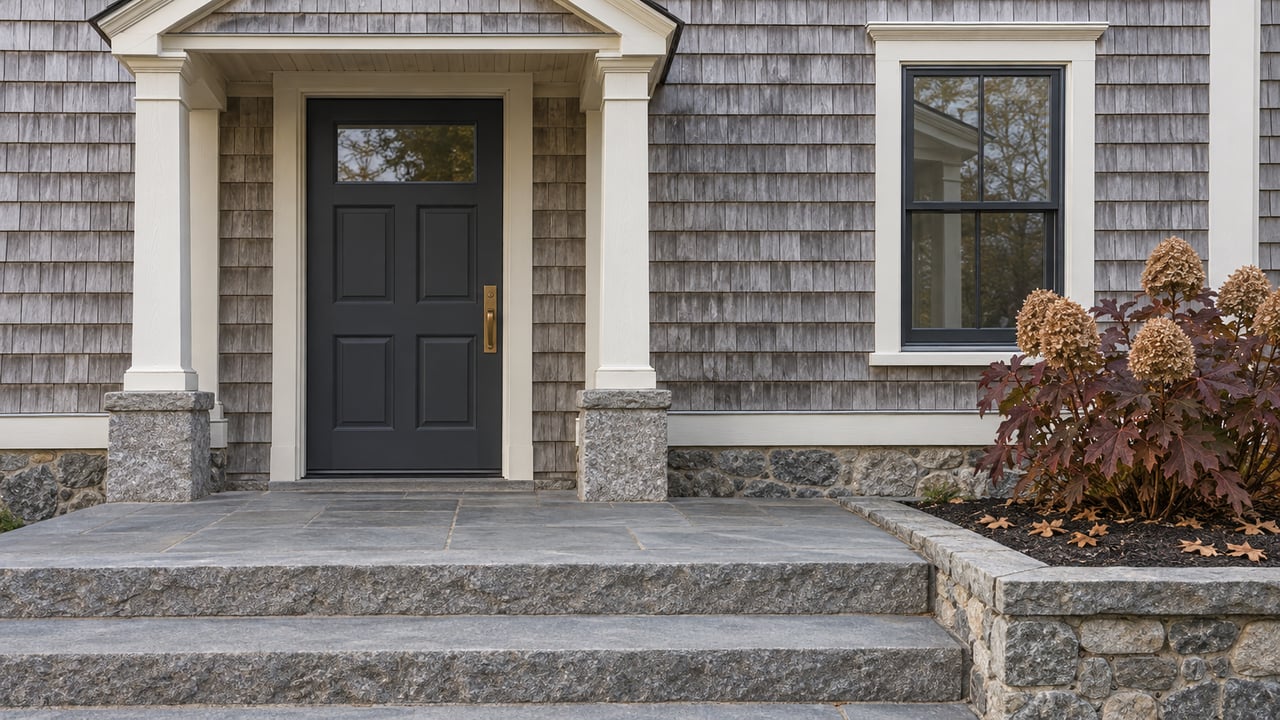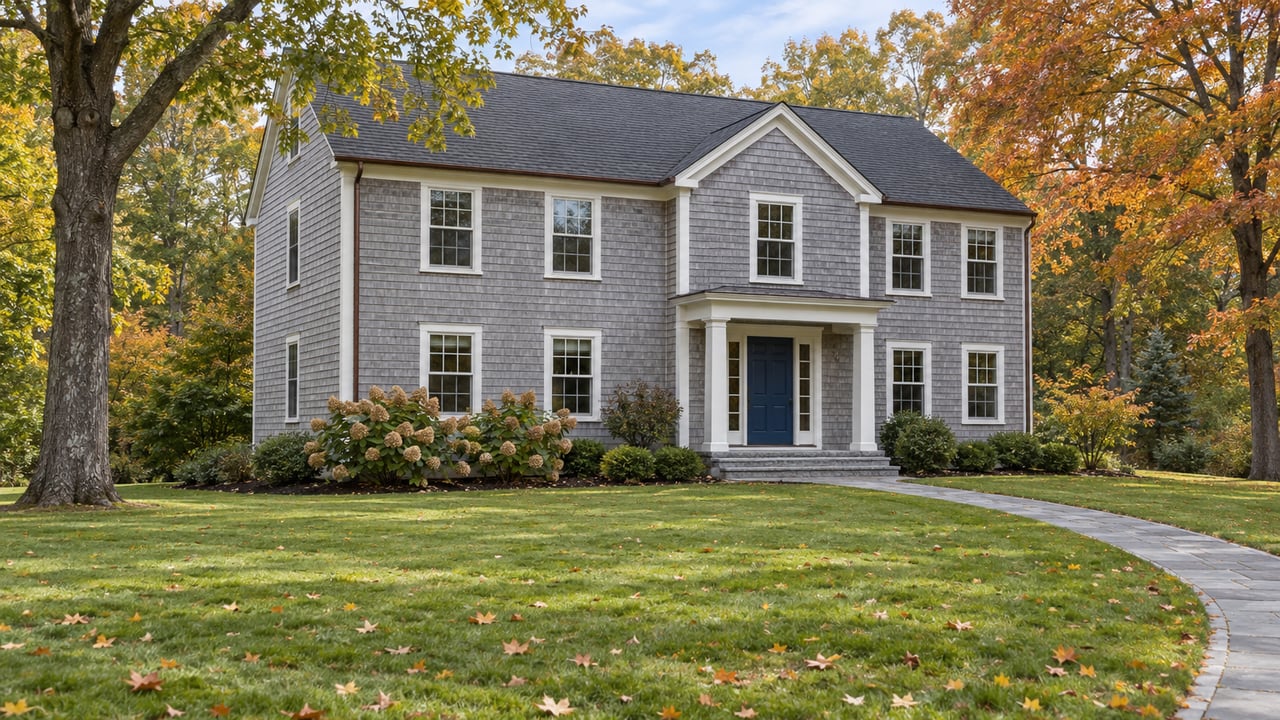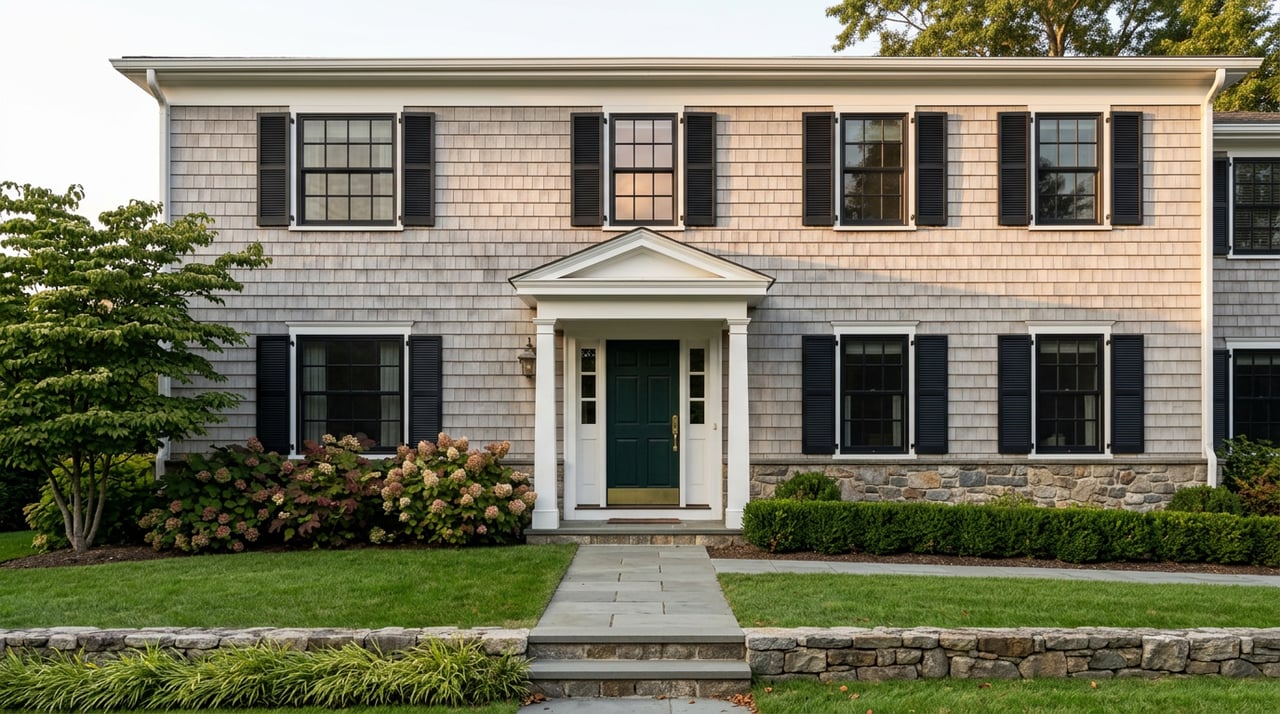
Two buyers are both told the same number this month: Greenwich's median sale price. One is looking at a shingle-style colonial three blocks from the Old Greenwich train platform. The other is looking at a stone farmhouse on four acres north of the Merritt Parkway. They are both, technically, shopping in Greenwich. They are not shopping in the same market, and the median that both of them read on a portal or in a market report describes neither of their transactions.
That's the thing about Greenwich that a single price point can't capture. The town covers roughly 60 square miles and holds close to 60,000 people, which is roughly the combined footprint of Darien, New Canaan, and Westport. Averaging a beachfront cottage in Old Greenwich with a ten-acre estate in backcountry and calling the result "the Greenwich market" produces a number that is technically correct and practically useless. If you're negotiating an offer this fall, the neighborhood you're standing in matters more than the town-wide headline you read to get there.
The Same Zip Code, Two Different Negotiations
Start with pace, because pace is where the story gets interesting. A breakdown of Greenwich's submarkets in the first quarter of 2026 showed single-family closings up 18 percent year over year town-wide, with the average days on market compressing from 109 to 75. That sounds like one unified acceleration. It isn't.
Old Greenwich and Cos Cob were the fastest-moving neighborhoods in that same period, both averaging under 40 days on market with sale-to-list ratios above 103 percent, meaning the typical home in those two areas sold for more than its asking price. Glenville moved at a similar clip while carrying a lower entry point, with a median around $1.685 million. At the other end of town, Back Country and North Parkway told a different story entirely: 105 to 120 days on market, with sale-to-list ratios below 97 percent. In plain terms, buyers in those neighborhoods are routinely closing below asking while buyers three or four miles south are competing above it.
| Submarket | Typical pace | Typical outcome |
|---|---|---|
| Old Greenwich, Cos Cob | Under 40 days | Sale-to-list above 103%, frequent overbidding |
| Glenville | Comparable speed | Lower entry point, median near $1.685M |
| South Parkway | Highest closing volume | Prices land close to list |
| Back Country, North Parkway | 105 to 120 days | Sale-to-list below 97%, room to negotiate |
Same town. Same MLS. Opposite leverage. A buyer who walks into an Old Greenwich showing prepared to negotiate the way they would in backcountry is going to lose the house.
The Median Is Blending Numbers That Don't Belong Together
Part of the confusion is that "the Greenwich median" isn't even one calculation. Depending on which source and which slice of the market you're reading, the town-wide figure moves by more than a million dollars. Town-wide MLS data for August 2026 put the median sale price around $1.85 million, a number that blends condos, smaller homes, and larger single-family sales into one line. The Greenwich Association of Realtors reported a very different figure for the second quarter of 2026: a single-family home median of $3,655,000, up 15.1 percent year over year, with 144 closings across the quarter. The same association's figures for June 2026 alone, the final month of that quarter, showed a single-family median of $3,812,500, a slight dip from June 2025, alongside an average of 37 days on market and a sharp jump in condo activity, with closings up more than 57 percent year over year.
None of these numbers is wrong. They're measuring different things. A blended median that includes condos will always sit well below a single-family median. A monthly figure will always bounce more than a quarterly one. If you're comparing what you read on a national portal to what your agent is telling you about a specific street, you're very likely comparing two different instruments, not two different opinions.
Why the Train Line Splits the Town in Half
The fastest-moving neighborhoods share one trait: proximity to a Metro-North platform. Greenwich has four stations, Greenwich, Cos Cob, Riverside, and Old Greenwich, and express trains reach Grand Central in about 45 minutes from the Greenwich station. Buyers in Old Greenwich and Riverside can walk to their train. Buyers in downtown Greenwich can walk to theirs in about ten minutes. That convenience shows up directly in the sale-to-list numbers.
Backcountry buyers are trading that convenience for something else. The area sits north of the Merritt Parkway, with roughly 1,700 homes spread across a landscape of stone walls, bridle trails, and long private driveways. The nearest station is more than five miles away, which typically adds 15 to 25 minutes of driving before the 45-minute train ride even starts. Buyers who prioritize acreage and privacy over a walkable commute are self-selecting into a slower, more negotiable market, and the data bears that out.
Greenwich buyers generally split into three groups. Finance professionals commuting to Manhattan gravitate toward the train access of Old Greenwich or Riverside. Buyers interested in the private school corridor around Greenwich Academy, Brunswick, and Greenwich Country Day tend to look centrally. Buyers who want scale and are willing to trade walkability for acreage head north into backcountry. Almost none of them are shopping the same inventory, which is exactly why one town-wide median can't serve all three.
The Backcountry Trade: Land for Leverage
If you're the buyer willing to trade commute time for acreage, backcountry's slower pace and softer sale-to-list ratio can work in your favor at the negotiating table. It also comes with due diligence that a downtown condo buyer never has to think about. Most backcountry properties rely on private wells and septic systems rather than town sewer and water. Before removing contingencies on one of these properties, it's worth confirming a few things directly with the town and your inspector:
- The location and age of the septic system and well, including the last pump-out and water test dates
- Whether the property has enough documented reserve area for a future septic replacement
- Whether wetlands, watercourses, or conservation easements limit where you can build, expand, or add outdoor amenities like a pool or tennis court
- Utility availability for natural gas and wired broadband, both of which can vary street to street in backcountry
None of this shows up in a median sale price. All of it shows up in a closing timeline if you skip it.
Glenville Is Quietly Changing While Everyone Watches the Avenue
As Greenwich Free Press reported, retail attention on Greenwich Avenue has been intense this year, capped by RH Estates, which opened this spring in the Beaux Arts limestone building at 265 Greenwich Avenue. Ralph Lauren occupied that space from 2009 to 2017, and after a stretch that briefly included SaksWorks and the restaurant Ruby & Bella's, both of which closed in 2023, the building sat quiet until RH moved in. The Greenwich Chamber of Commerce's executive director, Andrea Blume, called it a positive addition to the Avenue, noting that the building had seen a few tenants come and go before this one took hold.
But while retail consolidates uphill toward the Putnam Avenue design district, the more interesting shift for a buyer weighing entry points is happening west, in Glenville. Greenwich Grill, an upscale-casual American restaurant, opened in July 2026 at The Mill Waterfall on Pemberwick Road, in a space that had previously cycled through as Centro and then The Lion Brasserie. A Westchester family grocer known for its Italian bakery and prepared foods is bringing its first Connecticut store to 11 Glen Ridge Road, a few blocks away. Both openings sit near The Mill, a mixed-use redevelopment on Glenville Street that combines a converted 1881 mill building with apartments and retail across five buildings.
None of this changes Glenville's zoning or its train access overnight. What it does is add exactly the kind of dining and errand infrastructure that buyers in Old Greenwich and Riverside already take for granted, in a neighborhood that still carries one of the lower medians in town. That combination, comparable pace to the fastest-moving neighborhoods, a lower entry point, and a visibly improving amenity base, is the kind of signal that shows up in local business filings well before it shows up in a median price chart.
The Tax Line That Changes the Comparison
If you're weighing Greenwich against a neighboring town, the price comparison is only half the carrying-cost picture. Greenwich's mill rate for fiscal year 2025-26 is 12.041, meaning roughly $12.04 in tax per $1,000 of assessed value. That rate runs lower than Darien's 15.48 mills and New Canaan's 16.69 mills.
A Few Direct Questions
Is Old Greenwich or backcountry the "better" market to buy into? Neither is better in the abstract. Old Greenwich rewards buyers who value walkability and train access enough to compete above asking. Backcountry rewards buyers who want acreage and privacy and are comfortable with a longer due diligence process and more room to negotiate.
Why did the median sale price seem to drop even though the market felt busier? A falling median can reflect more transactions closing in a lower price band rather than an actual decline in value. Watching price per square foot alongside the median gives a clearer read than the median alone.
Does Glenville's lower median mean it's undervalued? It means Glenville has historically priced below the town's waterfront and central neighborhoods. Whether that gap narrows depends on how quickly the retail and dining upgrades near The Mill translate into sustained buyer demand, which isn't something a single quarter of data can confirm either way.
If you're trying to figure out which version of Greenwich actually fits your budget, your commute tolerance, and your negotiating position, that's a conversation worth having before you write an offer, not after. CT Home Keys works across Greenwich's submarkets every week and can walk you through what a specific street is actually doing right now. Request a Private Market Consultation to start that conversation.
This article is general information, not legal, tax or financial advice. Consult a qualified professional about your situation.